


A curious incident that made national news took place in Helsinki in the early 2010s. The incident involved a teenager who broke a shop window at a major shopping centre – but what made the case curious was not the act itself but the motive behind it: the teenager’s phone had run out of charge, and they had spotted an electrical socket through the window. At the time, the case was exceptional. The media treated it as evidence of the foolishness and ineptitude of youth, with headlines griping about how kids today cannot do anything without their phones.
But similar, more recent news stories can be found around the world and have actually become more common. In Europe, cases have been reported in which people have damaged property out of frustration stemming from the need to charge their phone battery. In the United Kingdom, for example, a man reportedly smashed a car window in order to get power for his phone. Similar cases have also occurred in Sweden.
All of this is linked to the broader phenomenon of how technological progress has made people dependent on smartphones, data communications and electricity.
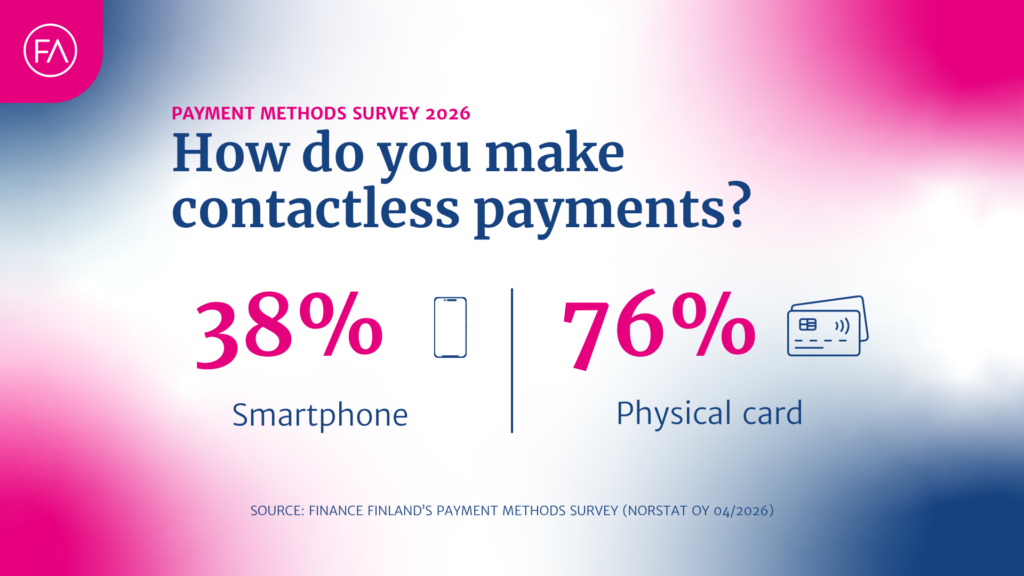
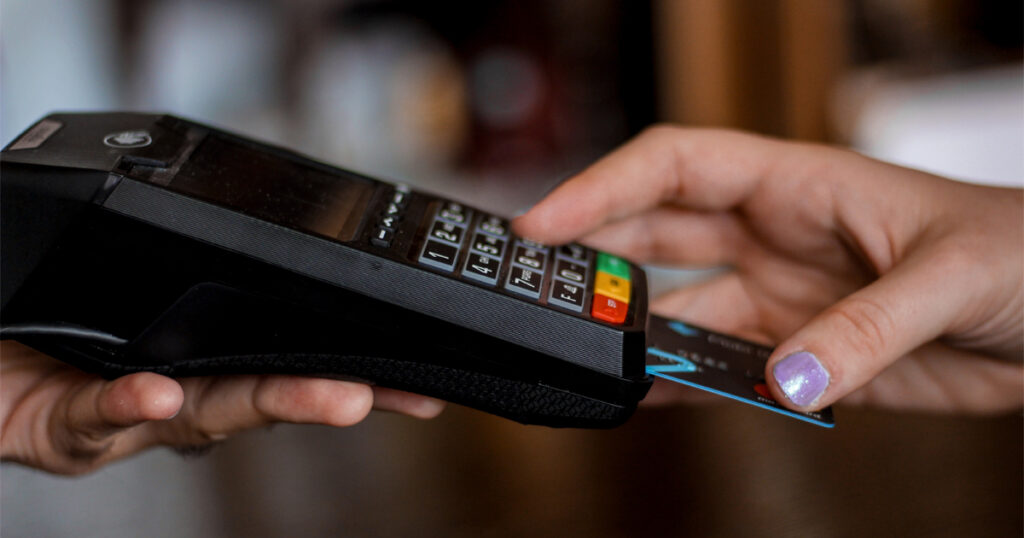
Smartphones are increasingly used for shopping and for making and receiving payments. In physical stores, payment is more and more often made either using contactless payment or a dedicated payment app. It is also increasingly common that a customer does not receive a physical payment card at all, either because they do not want one or because the card issuer does not provide physical cards. Contactless payment works everywhere. Phones have outnumbered cards, and new payment methods make full use of smartphone technology.
According to Statistics Finland, nearly every adult Finn uses a smartphone. Nine out of ten people aged 16 to 89 use their phone as their primary means of daily internet access. Overall, more than 80 per cent of Finns use the internet several times a day, and among 16- to 34-year-olds, this includes practically everyone. Smartphones have become a universal, personal piece of basic infrastructure. They are used especially for instant messaging, banking services, map and route information and news.
The shift towards smartphone-accessible services has significantly increased the importance of these devices for consumers, which has also led to the excesses described above. At the same time, society has responded to the growing need to use mobile devices: electrical sockets have been installed in public transport, for example, including aircraft, buses and trains. Many public spaces now also offer charging facilities. Access to the internet has likewise continued to expand.
Individual consumers can prepare for power cuts in several ways, for example with power banks or fixed emergency power supply equipment. Services such as Starlink enable consumers to maintain data communications, and offline internet solutions make it possible to access the internet during connection outages.
Against this backdrop, it is justified to demand that relevant actors enable phone-based services for consumers also under emergency conditions. This also applies to payments – customers’ access to day-to-day phone-based payment must be safeguarded for as long as possible.
”Which basic need receives highest priority?”
What role do smartphones, data communications and electricity play in crises and emergencies in the modern world? Which basic need receives highest priority?
The 72-hour rule for preparedness is a good starting point. Immaterial needs that are fulfilled by smartphones, the internet and access to news are more difficult to quantify but still highly relevant, as the need to distribute and receive information and to maintain contact becomes more pronounced during emergencies.
The saying that any society is ‘three meals away from anarchy’ often comes up when preparedness is being discussed. But how many hours can we manage without news or without information about the wellbeing of people who are important to us? How many smartphone charges or percentages of uptime away is the collapse of society?
Kirsi Klepp
Head of Card Payments Infrastructure
Finance Finland
Share







Contact the columnist
-

Kirsi Klepp
Head of Card Payments Infrastructure
Payment instrument infrastructure: card-based payment, cash, stablecoins, technical and security standards and descriptions related to payment instruments